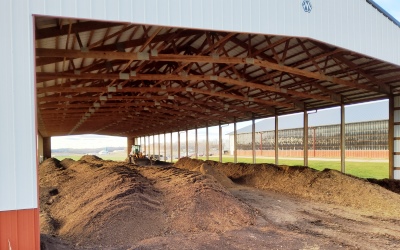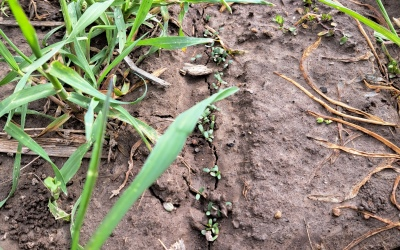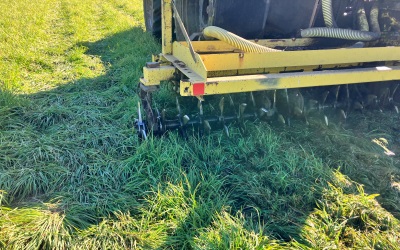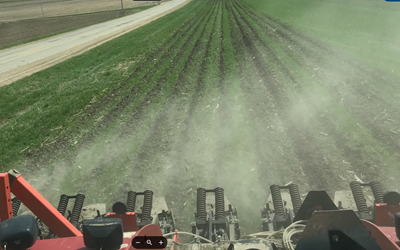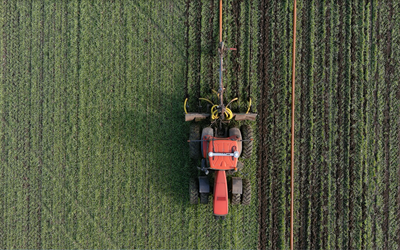
Brothers Steve, Jeff, and Randy, along with the next generation, Zac, make up Endres Berryridge Farm. The Endres’ operate a dairy farm northwest of Waunakee in the Six Mile Creek-Yahara River watershed. They farm 1,500 acres of cropland and raise a medium sized herd of registered Holsteins. The Endres’ grow corn, alfalfa, wheat, and grass hay. They incorporate cover crops into their cropping system and have tried a variety of tillage options, including no-till and strip-till. Manure management on the farm is also varied, including a composting operation, liquid and solid manures that are digested at community digesters, and the reuse of manure solids for bedding.
The Endres’ have been involved with farmer-led conservation efforts for over a decade, with Jeff serving as Chair of the Yahara Pride Farms farmer-led watershed group since the inception in 2011. The Endres’ are interested in a variety of research including compost nutrient cycling and availability, nitrogen management with cover crops and strip till, among others. Jeff hopes that the data collected through the demo farm collaboration will help answer many of the questions farmers in the area have regarding conservation practice implementation.
The current Endres farm was once owned by the grandfather of Steve, Jeff, and Randy, and it is also where their father, Donald, grew up. When all three sons decided to farm, the operation gradually expanded into the farm it is today.
Dairy production has long been at the heart of the farm. As the herd grew, so did the need for conservation practices. With more acres of corn silage being harvested and more manure being produced, the Endres family took a proactive approach to stay ahead of these challenges and address them head-on.
Manure management can be challenging, as application may cause significant compaction depending on the year and field conditions. Through trial and error, the Endres family developed a system for injecting manure with low-disturbance equipment into living cover crops after corn silage harvest. When needed, they pair this practice with low-disturbance deep tillage.
Manure management needs also helped drive the Endres family’s leadership in composting. Through many iterations, they developed an effective composting system that provides both bedding and fertilizer—not only for their own acres, but also for local landscapers.
More recently, the Endres family has refined a successful approach to no-till seeding of alfalfa. Before 2020, they began experimenting with no-till alfalfa seeding and found success planting into winter rye in early spring. This practice not only produces a strong stand of new alfalfa by summer, but also provides rye forage in the spring for heifer feed.
What they do on their farm is only part of the story. Jeff Endres helped start Wisconsin’s first farmer-led watershed group, Yahara Pride Farms. Established in 2012, the group was created to give farmers a voice. The goal was to build a self-directed, farmer-led organization that could develop solutions proactively, rather than have regulations imposed by non-agricultural stakeholders. Since then, the farmer-led watershed model has spread not only across Wisconsin, but throughout the country.
By combining conservation practices across their farm, the Endres family has achieved long-term reductions in both soil loss and phosphorus loss, based on annual measurements collected by Yahara Pride Farms. Beyond the data, they can also see the difference in the field. These practices are continuing to improve the farm’s soil health and strengthen its long-term resilience for the next generation of the Endres family.
Through his advocacy with Yahara Pride Farms, Jeff Endres and his fellow board members, have helped ensure that farmers remain at the table when policies and regulations are discussed. When farmers work together, they can play an active role in shaping the future of agriculture conservation.
Connect with area farmers through farmer-led watershed groups, attend events, connect with neighbors and others doing different practices that may be of interest to you.
Yahara Pride Farm Annual Conference (Midwest Farm Report)
Fireside Chat with Jeff Endres (Grassland 2.0)
Turning compost at Endres Berryridge Farms (Progressive Dairy)
Composting solutions for expanded farm operations and regional watershed improvements (MSA)